
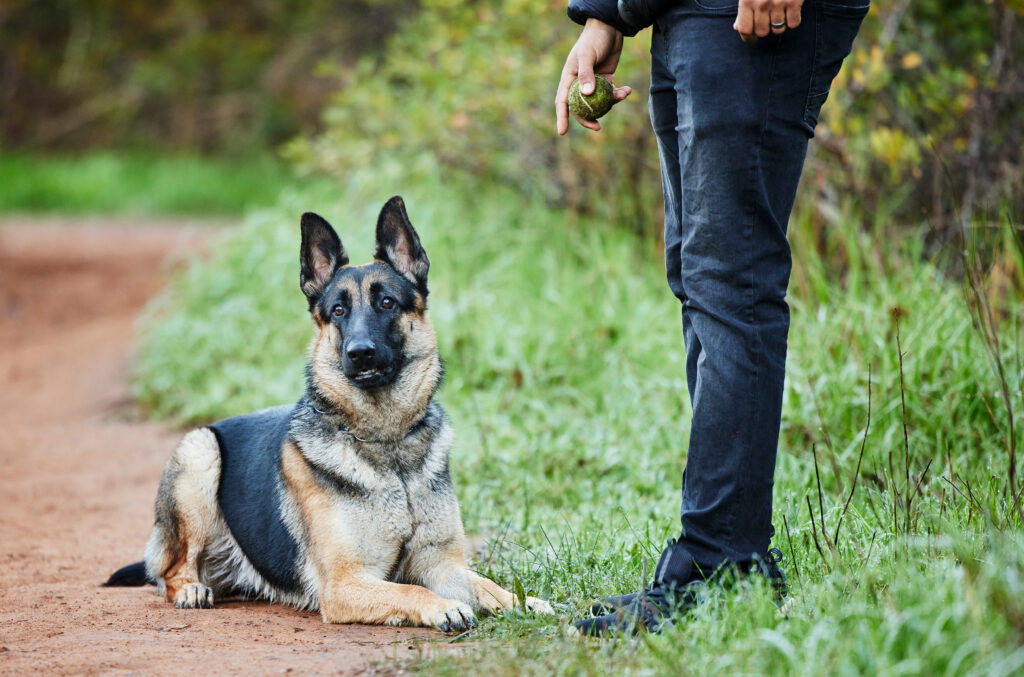
Your dog is stubborn. It’s too late to train them. Some habits are just who they are. If you’ve ever believed any of this, you’re not alone. Dog training myths are everywhere, and acting on bad information leads to real dog training mistakes that slow progress and make daily life harder for both you and your dog.
Is It Too Late to Train an Older Dog?
This is one of the most common dog training myths, and it keeps many owners from even trying. The truth is that dogs can learn at any age. What changes with older dogs isn’t the ability to learn; it’s the timeline. An older dog may take a little longer to build new habits, especially if they’ve had years to practice the wrong ones.
Many adult dogs can actually be easier to train than puppies. They have better focus and less impulsive energy. If your dog has been missing structure their whole life, starting now can still be effective and make a real difference in your dog’s behavior.
Do Dogs Misbehave Because They Want to Be the Boss?
The dominance theory, the idea that dogs are constantly working to outrank you, became very popular decades ago. It’s still one of the most widespread dog training myths today.
Dogs are not plotting a power grab. Most unwanted behaviors come from a lack of clear structure, not a desire to control the household. When a dog jumps on guests or ignores commands, it’s because the proper behavior hasn’t been taught or reinforced.
What Dogs Actually Need
Dogs thrive when expectations are clear and consistent. Leadership in dog training means setting boundaries, following through on commands, and communicating clearly. Misreading your dog’s behavior as a desire for dominance can lead to corrections that don’t address the problem, which is one of the most damaging dog training mistakes you can make.
Will Treats Alone Create a Well-Behaved Dog?
Treat-based training is a solid starting point, especially for puppies. But the idea that treats are all you ever need is a dog training myth that falls short in real-world situations.
Think about it; would your dog choose a piece of kibble over chasing a squirrel at full sprint? Probably not. Once distractions enter the picture, food motivation is typically ineffective. If treats are the only tool in your training plan, obedience tends to break down exactly when you need it most.
Reliable training means your dog responds in all kinds of situations, not just when you’re holding something they want. This is why in-home training programs that build real-world obedience are so valuable. As training progresses, the goal is for your dog to respond because the behavior has been reinforced consistently, not because a treat is visible in your hand.
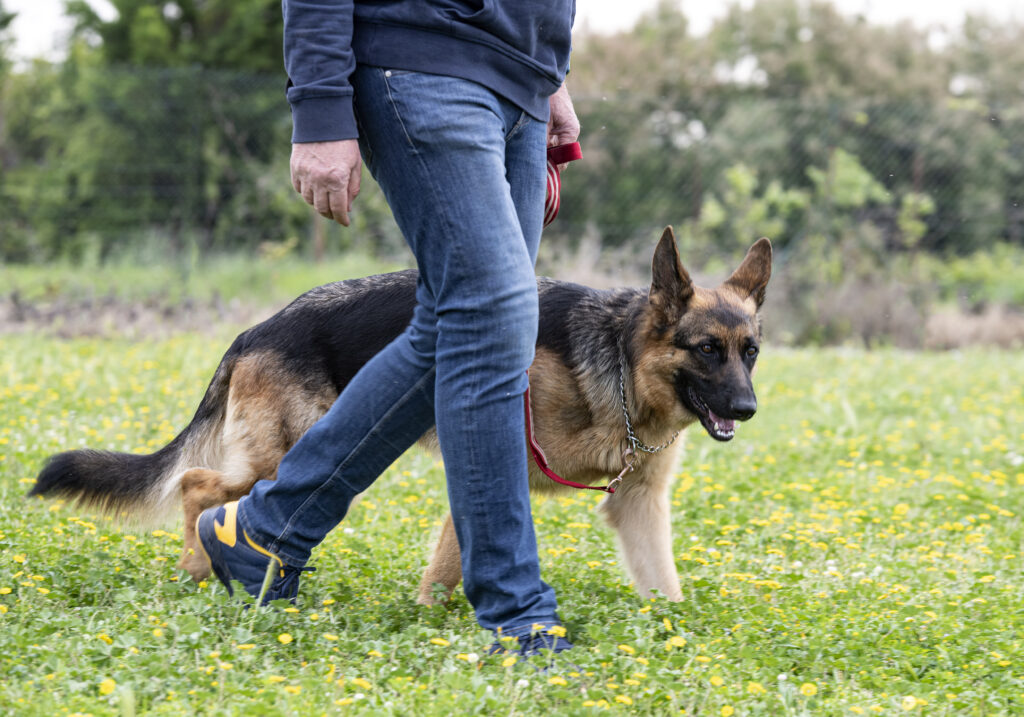
Does One Training Method Work for Every Dog?
Every dog is different. Drive level, breed tendencies, past experiences, and temperament all affect how a dog learns. Applying a standardized approach is another dog training mistake made by owners and inexperienced trainers alike.
A professional trainer first evaluates the individual dog, then develops a plan that fits. That’s why a puppy program looks very different from a behavior modification program for an adult dog. The foundation is the same, but the approach is tailored to the dog in front of them.
What Are These Dog Training Myths Costing You?
Believing the wrong things about dog training doesn’t just slow progress; it can make problems worse. Here are some common outcomes:
- Repeating commands without follow-through, which teaches dogs to ignore them
- Applying corrections at the wrong time, creating confusion instead of clarity
- Waiting too long to get professional help because the myth says it’s “too late”
- Relying only on treats, which fails in real-world distractions
The good news is that most behavioral issues, even long-standing ones, can be improved with the right approach. For a look at how structured training creates lasting results, check out our On and Off-Leash Board and Train program.
Ready to Move Past the Myths?
At Beau’s K9 Academy, we’ve worked with dogs of all ages, breeds, and behavioral histories, and we’ve seen firsthand what happens when dog training myths drive the approach. We build every training plan around your individual dog: their temperament, their drive, and your goals as an owner. Whether your pup needs foundational obedience or an immersive experience with our board-and-train program, we’re here to give you a plan that holds up in real life. Contact us today to schedule a consultation because your dog deserves training built on real facts!

Dog Training Myths FAQs
Can dog training myths actually cause harm?
Yes. Acting on incorrect information leads to dog-training mistakes that slow progress, create confusion, or worsen behavioral problems over time.
Is it really possible to train an older dog?
Absolutely. Dogs can learn at any age. Adult dogs may need more time to break old habits, but with consistent structure, they make real progress.
What is the most common dog training mistake owners make?
Repeating commands without following through. When dogs learn that “sit” sometimes means sit and sometimes means nothing, the command loses its meaning entirely.
Does balanced training mean being harsh with my dog?
No. Balanced training uses both positive reinforcement and well-timed corrections. The goal is clear communication, not fear or intimidation.
How do I find the right training program for my dog?
Start with a professional evaluation. A good trainer will assess your dog’s temperament and history before recommending a program because no two dogs need exactly the same approach.