
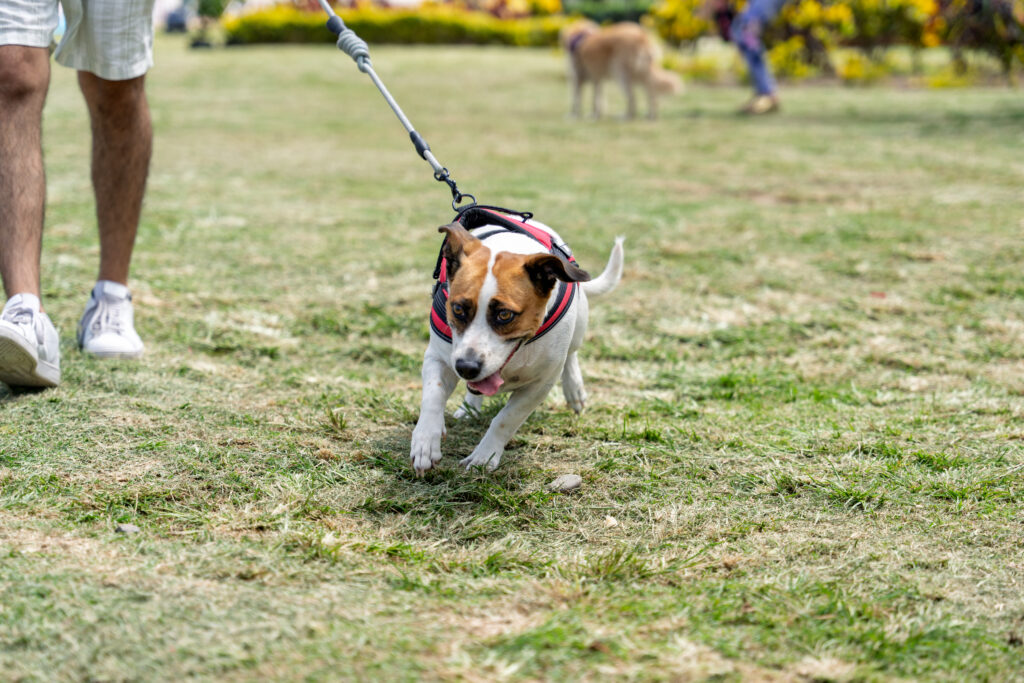
A daily walk should be an enjoyable opportunity for you and your dog to get outside, exercise, and spend time together. Unfortunately, when your dog constantly pulls toward every interesting smell, person, or passing animal, walks can quickly become frustrating and even unsafe. Learning how to stop a dog from pulling on the leash involves more than simply holding the leash tighter.
Your dog needs to learn where you want them to walk, how to stay engaged with you, and that pulling isn’t the way to get where they want to go. With patience and consistent training, better leash manners are possible for dogs of all ages, sizes, and personalities.
Why Do Dogs Pull on the Leash?
Dogs don’t naturally understand how they’re expected to behave on a leash. They tend to move faster than people, and once they’re outside, their instincts tell them to explore. An interesting scent across the sidewalk may be much more exciting to your dog than maintaining a steady pace beside you.
Several factors can contribute to pulling, including:
- Excitement: Going outside can be one of the highlights of your dog’s day, making it difficult for them to contain their enthusiasm.
- Interesting surroundings: New smells, sounds, animals, and people can quickly pull your dog’s attention away from you.
- Lack of leash training: Dogs need to be taught where and how they’re expected to walk.
- Learned behavior: If pulling gets your dog to the tree, person, or smell they’re interested in, they learn that pulling works.
- Difficulty with distractions: Some dogs understand leash manners at home but struggle to maintain them in stimulating environments.
Identifying what drives your dog’s pulling can make it easier to determine which aspects of training need the most attention.
Tips on How To Stop a Dog From Pulling On The Leash
Better leash manners are developed through repetition rather than one perfect walk. When figuring out how to stop your dog from pulling on the leash, focus on teaching the behavior you want instead of simply reacting every time your dog gets ahead.
Start Somewhere Quiet
Don’t begin leash training on the busiest street in your neighborhood. Your home, yard, or another quiet area provides a better environment for introducing expectations without overwhelming distractions.
Practice walking short distances with your dog near you. Once they’re consistently successful, gradually move to locations with more activity.
Establish the Right Walking Position
Your dog needs a clear understanding of where you want them to be. Choose a consistent walking position beside or close to you and reward your dog when they maintain it with a loose leash.
Treats and praise can help reinforce the behavior in the beginning. Over time, your dog learns that staying near you allows the walk to continue pleasantly.
Don’t Reward Pulling With Forward Movement
One of the most important lessons when leash training a dog is teaching them that pulling on the leash isn’t going to get them closer to their destination.
When your dog pulls, stop moving or calmly redirect them. Once they return to the appropriate position and the leash loosens, continue walking. This creates a simple connection: loose leash means we move, pulling means we don’t.
Avoid yanking your dog backward out of frustration. The goal is to teach them to make the correct choice, not turn the walk into a tug-of-war.
Reward Attention and Check-Ins
Your dog doesn’t need to stare at you throughout the entire walk, but they should remain aware of where you are and what you’re doing.
When your dog voluntarily looks toward you or checks in, reward them with praise or a treat. These moments build engagement and make it easier to regain their attention when you notice a distraction ahead.
Practice Changing Directions
Changing direction periodically teaches your dog to pay closer attention to your movement instead of assuming they control the route.
If your dog starts getting too far ahead, calmly turn and walk another way. Keep the movement controlled and natural. As your dog learns to follow your direction, they’ll become more attentive to your pace and position.
Introduce Distractions Gradually
A dog who walks beautifully in your driveway may struggle when another dog appears across the street. That’s normal. Distractions add difficulty to any learned behavior.
Gradually practice around people, traffic, unfamiliar smells, and other dogs. Start far enough away that your dog can still respond to you, then decrease the distance as their skills improve.
Be Consistent
Everyone who walks your dog should follow the same rules. If one person allows pulling while another stops every time the leash tightens, your dog receives mixed messages.
Short, productive training walks are often more useful than long outings filled with frustration. Build distance and duration as your dog’s skills become more reliable.
Common Leash Training Mistakes to Avoid
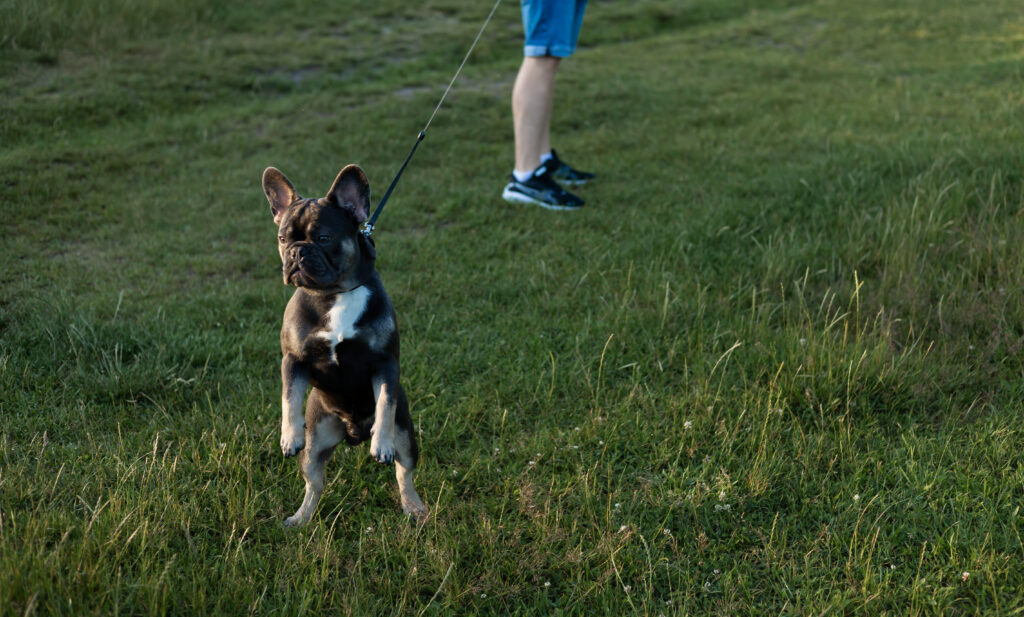
Even well-intentioned owners can unintentionally make leash pulling harder to correct. If you’re trying to figure out how to stop a dog from pulling on the leash, watch for a few common mistakes:
- Continuing to walk while your dog pulls: This rewards pulling by allowing your dog to reach what caught their attention.
- Progressing too quickly: Moving immediately into a highly distracting environment can make it difficult for your dog to succeed.
- Waiting too long to redirect: It’s easier to get your dog’s attention before they’re completely focused on another dog, person, or animal.
- Changing the rules: Allowing pulling sometimes and discouraging it at other times makes expectations unclear.
- Losing patience: Leash walking is a learned skill, and developing reliable behavior requires repetition.
When Should You Consider Professional Leash Training?
Sometimes leash pulling is more complicated than an excited dog walking too quickly. Lunging, barking, fear, anxiety, or intense reactions to other dogs and people may indicate a larger behavioral issue.
Professional training can also be valuable if your dog is large or powerful enough that pulling has become difficult to control safely. A trainer can evaluate what’s causing the behavior and develop a strategy appropriate for your dog’s temperament, habits, and environment.
Just as importantly, professional training teaches you how to handle the leash, give clear commands, recognize distractions early, and reinforce progress at home.
Ready to Stop Your Dog From Pulling On The Leash?
Walks shouldn’t feel like a battle between you and your best friend. At Beau’s K9 Academy in Bonneau, SC, we offer extensive professional training programs designed to improve communication, obedience, and real-world behavior.
Depending on your dog’s needs, our programs can address puppy training, basic and advanced obedience, behavior modification, socialization, confidence building, as well as on and off leash reliability. We take the time to understand each dog’s temperament and challenges so training can address the behaviors that matter most to your family.
If you’ve tried to stop a dog from pulling on the leash without seeing the progress you hoped for, you don’t have to keep struggling through stressful walks. Contact Beau’s K9 Academy today to discuss your dog’s needs, find the right training program, and take the first step toward calmer, safer, and more enjoyable walks together.

How to Stop a Dog From Pulling on the Leash FAQs
Why does my dog keep pulling on the leash?
Dogs may pull because of excitement, interesting surroundings, insufficient leash training, or because pulling has previously helped them reach what they want.
Should I keep walking when my dog pulls?
No. Continuing forward can teach your dog that pulling works. Resume walking when the leash is loose and your dog returns to the appropriate position.
Where should I begin leash training?
Start in a quiet, familiar environment with minimal distractions, then gradually practice in busier locations.
How can I keep my dog focused during walks?
Reward voluntary check-ins and gradually practice around distractions so your dog learns to stay attentive to you.
Does everyone in my household need to follow the same leash rules?
Yes. Consistent expectations from everyone who walks your dog make it easier for them to understand the desired behavior.
When should I consider professional leash training?
Consider professional help if pulling persists, becomes difficult to control safely, or is accompanied by lunging, barking, fear, anxiety, or reactivity.