
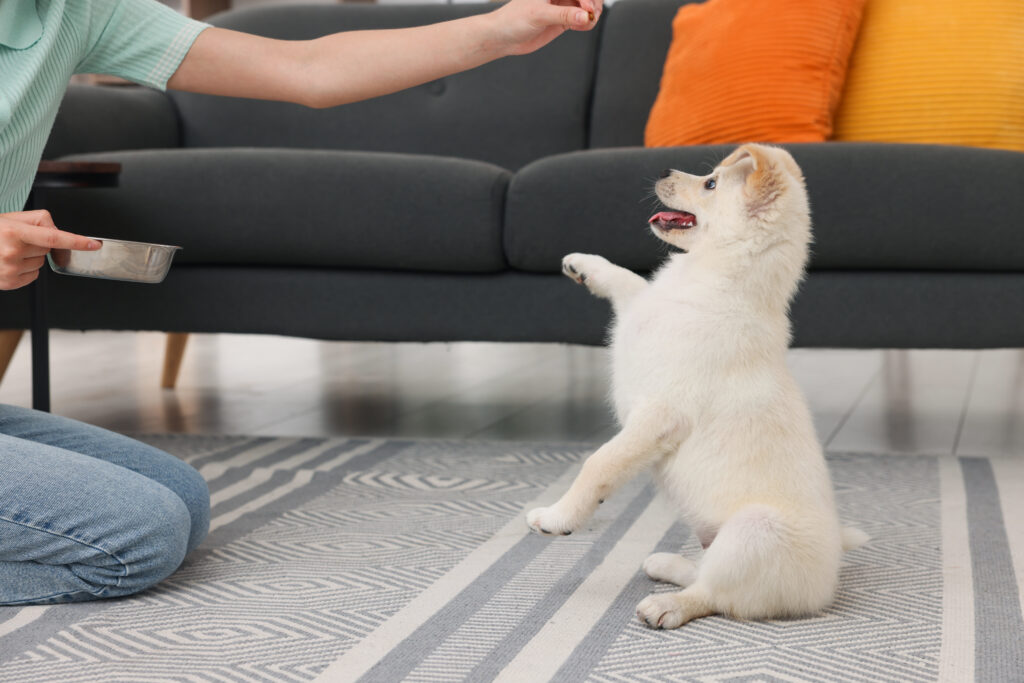
Bringing home a new puppy means plenty of excitement, affection, and memorable firsts. It also means potty accidents, chewed belongings, interrupted sleep, and a puppy who has no idea what the household rules are yet. Starting in home puppy training early gives your new companion the guidance they need while helping you establish routines and expectations from the beginning. When training takes place in your puppy’s home environment, everyday situations can become valuable opportunities to teach good habits.
Why You Should Start Puppy Training Early
Your puppy starts learning about your household from the moment they arrive. They quickly discover where they sleep, when they eat, what gets your attention, and which behaviors lead to rewards. Starting training early helps ensure the lessons they learn are the ones you actually want them to remember.
Puppies Begin Learning From Day One
A puppy doesn’t know that chewing a shoe is different from chewing a toy or that jumping on someone isn’t an appropriate greeting. Without guidance, they simply repeat behaviors that feel rewarding or interesting.
Early training gives you an opportunity to redirect unwanted behaviors before they become established habits. Instead of trying to correct months of jumping, chewing, or pulling, you can begin teaching appropriate behavior from the start.
Structure Eases the Transition
Moving into a new home is a major adjustment for a puppy. A predictable schedule provides some much-needed stability during this transition.
Consistent times for meals, bathroom breaks, exercise, training, and rest help puppies understand what happens throughout their day. That structure can also make it easier for owners to recognize when their puppy needs to go outside, needs activity, or simply needs some quiet time.
Building Communication and Trust
Training isn’t only about obedience. It’s one of the first ways you and your puppy learn to communicate with each other.
Clear commands and consistent expectations help your puppy understand what you’re asking. In return, you’ll become better at recognizing your puppy’s behavior and needs. This early communication builds trust and creates a foundation you can continue developing throughout your dog’s life.
Benefits of In Home Puppy Training
While puppies eventually need to learn how to behave in many different environments, starting at home has some important advantages. In home puppy training allows lessons to address the situations your puppy encounters every day.
Some of the primary benefits include:
- Training in a familiar environment: Your puppy can learn new skills in a place where they’re comfortable before adding the distractions of unfamiliar surroundings.
- Addressing real household problems: A trainer can see where behaviors such as door rushing, furniture jumping, or inappropriate chewing actually happen and develop practical solutions.
- Individual attention: Training can be adjusted to your puppy’s temperament, learning style, and progress rather than following the same approach for every dog.
- Hands-on education for owners: You can learn how to give commands, reward appropriate behavior, and respond consistently when problems arise.
- Convenient practice opportunities: Because training is incorporated into your home routine, you have frequent opportunities to reinforce lessons throughout the day.
By working in your home environment, training can improve puppy behavior while helping your dog become comfortable with your family’s schedule and way of life.
What Should Early Puppy Training Address?
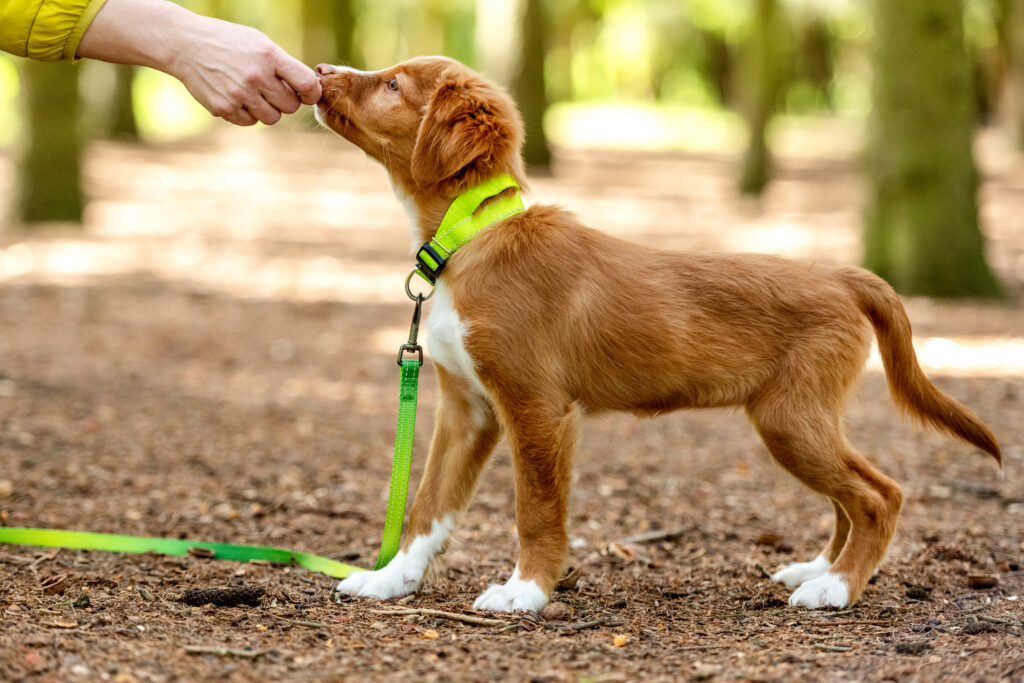
Early puppyhood isn’t the time to worry about complicated tricks or advanced obedience. The priority should be practical skills that help your puppy become a safe, confident, and enjoyable member of your household. A structured in home puppy training program can address several important areas.
Potty and Crate Training
House training is usually one of the first priorities for new puppy owners. A consistent schedule for bathroom breaks, combined with supervision and positive reinforcement, helps your puppy understand where they’re expected to go.
Crate training can complement this process while providing your puppy with a secure place to sleep and relax. The crate should be introduced positively so your puppy learns to see it as a comfortable personal space rather than a punishment.
Basic Obedience
Commands such as “sit,” “stay,” “come,” “down,” and “leave it” create an early vocabulary between you and your puppy. These cues aren’t just about having an obedient dog. They can also help you safely manage everyday situations.
Once your puppy understands these basics at home, you can gradually practice them around more challenging distractions and environments.
Leash Manners
Introducing a collar or harness and leash early helps prepare your puppy for future walks. Puppies can begin learning to stay near you and pay attention rather than immediately pulling toward every interesting sight or smell.
Establishing these expectations early can make walks much more enjoyable as your puppy becomes bigger and stronger.
Biting and Chewing
Exploring with their mouths is normal for puppies, but they need guidance about what’s appropriate to chew. Redirecting your puppy toward suitable toys teaches them better choices while protecting your hands, shoes, furniture, and other belongings.
Consistency matters here. Everyone in the household should respond to biting and inappropriate chewing in the same way.
Household Etiquette
Good manners start with clear boundaries. Depending on your household, you may want to address jumping on guests, begging, rushing through open doors, or climbing onto furniture.
Teaching appropriate alternatives early is generally easier than trying to change a behavior your dog has practiced for months.
Positive Socialization
Socialization involves gradually introducing your puppy to different people, sounds, objects, surfaces, and environments. These experiences should be controlled and positive rather than overwhelming.
The goal is to build confidence so your puppy becomes increasingly comfortable navigating unfamiliar situations as they grow.
Your Role in Your Puppy’s Success
Even the best professional trainer can’t replace consistent reinforcement at home. Your puppy learns through repetition, which means the entire household should follow the same expectations.
Professional in home puppy training can show you what to do, but practicing those lessons between sessions helps turn new skills into reliable habits. Keep practice sessions short and manageable, reward progress, and remember that mistakes are a normal part of raising a puppy.
Consistency doesn’t mean expecting perfection. It means giving your puppy clear guidance each time the same situation occurs.
Ready to Start In Home Puppy Training in SC?
The habits your puppy develops now can influence your life together for years, making early training an investment in both your dog’s future and your relationship. Serving Bonneau, SC, and the surrounding Charleston County area, our team is committed to helping you and your new puppy build a strong bond.
At Beau’s K9 Academy, we provide personalized in home puppy training designed around your puppy’s needs and your family’s everyday routine. Our professional trainers can help you tackle potty and crate training, basic obedience, leash manners, socialization, puppy biting, and household boundaries while teaching you how to continue reinforcing those skills.
You don’t have to spend the first months of puppyhood wondering whether you’re handling each challenge correctly. With professional guidance, you can set clear expectations while building confidence and trust from the start.
Contact Beau’s K9 Academy today to schedule your puppy’s training and start building the good habits that can last a lifetime.

In Home Puppy Training FAQs
When should I start training my new puppy?
Training can begin as soon as your puppy comes home, starting with simple routines, boundaries, and age-appropriate skills.
What are the benefits of in home puppy training?
It allows your puppy to learn in a familiar environment while addressing behaviors and challenges specific to your household.
What should my puppy learn first?
Early priorities include potty and crate training, basic obedience, leash manners, appropriate chewing, household boundaries, and socialization.
Can in home training help with puppy biting?
Yes. Training can teach you how to redirect normal puppy biting toward appropriate toys and consistently reinforce better behavior.
Why is consistency important when training a puppy?
Consistent commands and rules make it easier for your puppy to understand what is expected of them.
Does professional puppy training require owners to practice at home?
Yes. Regular reinforcement between professional sessions helps your puppy turn newly learned skills into reliable habits.
How does Beau’s K9 Academy personalize puppy training?
Training can be tailored to your puppy’s temperament, learning style, progress, and the specific challenges occurring in your home.